Saturday, September 17, 2011

추석

Last Monday was 추석 Chuseok (秋夕), Korea's equivalent to Thanksgiving.  It is a holiday that celebrates the good harvest, and most Koreans go back to their hometowns to celebrate with their families.  As a result, Seoul becomes eerily quiet and there is nothing to do in the city as most businesses close up shop.  It is normally a 3-day holiday (the days before and after Chuseok are also holidays), but since Chuseok fell on a Monday this year, we only had 2 days off from school this year.  Last year was kind of nice because Chuseok was on a Wednesday, meaning that we got Tuesday, Wednesday, and Thursday off.  I decided to skip school on Monday  (giving me a 5 day weekend) and take a trip to Jeju Island.  This year, I stayed closer to Seoul and spent the holiday at my aunt's place in Goyang, the same place I stayed when I first arrived in Korea.  It was really nice to have their company, and I'm so glad they invited me to spend the holidays with them.  As I mentioned in a prior post, my aunt is an amazing cook.  The last time she prepared a large feast was for Jesa, a ceremony for honoring ancestors. Tradition stipulates what food should be prepared and where it should be placed on the table.  In a similar fashion, a ritual called Charye 차례 (茶禮) is performed for Chuseok, although the food is arranged differently.  I can't say enough how amazing my aunt is at cooking.  She made everything from scratch except for the rice cakes (called 송편 songpyeon).  I got to help a little bit by putting flour on the fish and cucumbers, while my cousin applied a light coating of egg and cooked it.


So much food!!!


As for Jesa, to honor the dead we performed a jeol, or traditional bow.  Below is a picture of me attempting to do one for Jesa a month ago. 


After paying our respects, we feasted!  Everything tasted amazing.  Following the meal, we had 식혜 shikhye (食醯),  a sweet rice drink for dessert.  
Shikhye
Later, we spent the evening at the 일산 분수, a huge water fountain in Ilsan that holds a large water/light show that is synchronized with music.  It's the biggest attraction in Ilsan and apparently people come from all over Korea to see it.  In addition to playing Korean songs, they played popular American songs like Coldplay's Viva la Vida and Star Wars.  It was a nice relaxing evening.  

Starting this week, in addition to taking Korean classes, I've been helping Sogang develop a new Korean textbook specifically catered to beginner students from Canada.  I worked with 김성희 and 이유진 쌤 on translation and was able to provide some input of my own on how to improve the beginner level textbooks (although usually very minor things).  This project was assigned to me because I wanted to stay in Korea a month after the fall term ended.  Normally, I would have left Korea in mid-November, but then I would have been stuck at home for 2 months without anything to do.  As much as I love my family, I figured this was too long so when I purchased my airline tickets for Korea, I decided to stay for an extra month.  Trying to figure out something to do for that extra month, I asked Sogang if I could pay 30% of the tuition and take 3 weeks (of a 10 week program) of Level 6.  They said that they weren't allowed to accept a partial payment, but that they would let me take it for free if I was able to help them on this project - which I gladly accepted.  Sogang University has given so much to me in the form of an excellent Korean language education (including excellent courses, top notch teachers, and chances to experience Korean culture on field trips around Korea), and I was excited at the opportunity to help them make their teaching materials better.  In addition to the free 3 weeks tuition, on nights that I work for them they buy me free pizza, which is an added bonus.  Fortunately the workload isn't too burdensome.  I only have to come in one night a week, which still gives me plenty of time to focus on my studies.  

In class this week we've been studying 사자성어 (四字成語) four-character Chinese maxims, which are four syllable phrases originating from Chinese.  It's been fun for me because I've had a little obsession with hanja 漢字 (chinese characters) ever since I took Japanese in high school.  At one point I supposedly knew 400 characters, although since I haven't taken any Japanese in 5 years I've forgotten most of them (trust me, I can't speak a word of Japanese anymore).   Having a knowledge of Chinese characters is extremely helpful when learning Korean because at least half of the words in Korean are derived from Chinese.  It's extremely useful when trying to remember the definition of a word.  For example, in Level 4 I was having a hard time memorizing the word 감동 gamdong (感動) (to be emotionally moved, to be touched), until I realized that the word was comprised of the characters 'gam' 感 meaning emotion and 'dong' 動 meaning to move, literally to be moved emotionally (get it?).  For this reason, when I was trying to figure out what I wanted to go over in my private 1-on-1 class, I originally wanted to try to learn hanja, although I realized that actually learning to write the characters probably wouldn't be the most efficient way to improve my Korean.  Instead, now when learning new vocab, I go through my electronic dictionary and try to figure out the meaning of the characters for a specific word.  For example, I have no idea how to write the character 'bi' 비 (秘), but I know it has something to do with 'mystery' since it is used in the words 'bi-mil' 비밀 (秘密) meaning a secret (in general) and 'bi-gyeol' 비결 (秘訣) meaning secret (know-how).  I think that learners of Korean who keep knowledge of Hanja in the back of their mind (not necessarily knowing how to write the characters, but as I mentioned having an idea of what a certain syllable block means) will find it extremely helpful, in much the same way that Latin learners can better understand English.  

For some of the readers of this blog who know Chinese (I'm hoping there are a few?), here are some of the expressions we learned.  I'm curious if they're actually used in Chinese nowadays.  

塞翁之馬 새옹지마 (sae-ong-ji-ma)  - Life is full of ups and downs (Literally: Border Old Man's Horse)
莫上莫下 막상막하 (mak-sang-mak-ha)  - To be neck and neck (Not High Not Low)
東問西答동문서답 (dong-mun-seo-dap) - a nonsensical answer (East Question West Answer) 
咸興差使 함흥차사 (ham-heung-cha-sa) - Someone who goes away and disappears for a long time (Hamheung messenger)
一石二鳥 일석이조 (il-seok-i-jo) - To kill two birds with one stone (One Stone Two Birds)
雪上加霜 설상가상 (seol-sang-ga-sang) When it rains, it pours (Snow Above Add Frost)
以心傳心 이심전심 (i-shim-jeon-shim) to read someone's mind (Through Heart Convey Heart)


While I'm on the topic, I wanted to talk about my Korean name.  My name in Korean is 김상우 (Gim Sang-oo) (金相愚).  It's not completely made up - the first character Gim is my mom's maiden name, and the second character 'sang' is a 돌림자 dollimja, or generational character.  By tradition, all of the males in my family in the same generation (and most other Korean families) have the same second character, hence why my cousins are all named 상훈 Sang-hun, 상민 Sang-min, etc.  The final character 'u' was just one that my mom chose because she liked it.  The first character 'gim' literally means 'gold', the second character 'sang' means 'each other', and the third character 'u' means stupid.  I know what you're thinking - Ben, your name literally means Each Other Stupid?  Why on earth would you want that name?  I've actually gotten this question from a few Koreans and mostly Chinese-Americans / Singaporians.  But as any native Chinese speaker (who completed high school and college in China) will tell you, the 'u' does mean stupid, but in a good way.  How can this be?  Below is something a Chinese friend who took Level 4 Korean with me sent me to explain it: 

大智若愚dà zhì ruò yú, 某些才智出众的人不露锋芒,看来好象愚笨。出自:宋·苏轼《贺欧阳少师致仕启》:“大勇若怯,大智如愚。”

큰 지혜를 가지고 있는 사람은 자신의 재능을 뽐내지 않기 때문에 얼른 보기에는 어리석은 사람같이 보인다.  


He knows most who speaks least.; 
Still water runs deep.; 
A man of great wisdom often appears slow-witted.; 
An empty vessel makes the most sound


So basically while 'u' literally translates to 'stupid', it also has a deeper meaning of being 'humble.'  In fact,  the former president of Korea 노태우 No Tae-u 
(盧愚) uses the same character in his name, proving that naming a child with the character for stupid doesn't preclude them from success.  In fact, my mom seems convinced that by choosing 愚 as the character for 'u' rather than a nicer sounding character like 友(friendly) or 佑 (helping), it'll make me more successful in life, just like No Tae-u.  She 'proves' this by informing me that 권상우 Kwon Sang-u, a famous actor/model in Korea whose name uses the more pleasant sounding characters 相佑 (each other helping) was involved in a hit-and-run accident where he was supposedly driving drunk.  I'm not sure if I believe what my mom says, but I'll just trust her for now.  

While on the topic of chinese characters with deep meanings, I used to always wonder why there were very few Nobel Literature Prize Laureates who were Asian (I only counted one).    Are Asians really just not as good at literature as their European counterparts?  I suspect it is because of the richness of information and nuance associated with each character/word in East Asian languages, which gets completely wiped out upon translation to a romance language.  For example, the character 愚 might simply be translated as 'stupid' and lose all the other associated meanings with it (humbleness).  I can't speak for Chinese, but I know that there are tons of words in Korean that translate to the same word in English, having only very subtle differences in use and meaning.  For example, in my private 1-on-1 class, I had to read a newspaper article in Korean about Obama's Jobs Speech after making a presentation about it.  (I wanted to go over newspaper articles since I still have an incredibly difficult time understanding them, because of the difficult chinese-derived vocabulary used in them).  After going through the vocab words I didn't know with the teacher, I came to realize that there are at least 5 different ways to say the word 'to reduce' in Korean: 줄이다, 낮추다, 감면 (Gam-myeon 減免), 경감 (Gyeong-gam 輕減), 인하 (In-ha 引下).  Each has a slightly different meaning and usage, which at this point I don't completely understand. I think this is the main reason why Korean is listed as a Category IV language by the U.S. Defense Institute, the highest level of difficulty for English speakers.  At first, Korean can seem deceptively easy with its straightforward phonetic alphabet and simple (in my opinion) grammar.  But there are just so many different words with slightly different nuances, which don't correspond to words in English like words in Spanish, German or French would.   I think this'll be one of the main challenges in my Korean language studies - not just expanding my vocabulary, but learning in which situation I'm supposed to use a word.    
I realized I got a little off topic, but yes - I suspect that East Asians won't be able to win very many Nobel Literature Prizes because the Swedish judges can't understand the complexities of the Chinese/Korean language.  Which is a shame really.  I acknowledge that I'm not a linguistics major though, so I might be completely wrong.  If anyone has any ideas/thoughts, feel free to leave a comment!


Friday, September 9, 2011

Concert, Illness, New Phone, First Week of Classes, and other happenings


Last Saturday my cousin Kyeongju performed at a concert with some other instrumentalists.  She's a vocal studies graduate student at Ewha University.  There were four pianists, two flautists, one cellist, and one vocalist.  She performed the last two selections, a piece from a German opera and one from an Italian opera, and sang beautifully.  I’m so proud of her! 

From L: My cousin Hagyu, my aunt, my cousin Kyeongju, my great aunt, and me

She offered to take me out to a Noraebang (karaoke) place sometime… although I’m not sure if I should take her up on that offer.  I can’t sing to save my life.
Kyeongju and her boyfriend took me out after the concert to eat Samgyetang (), one of my favorite Korean dishes.  It’s a type of soup with a small chicken stuffed with rice and ginseng.  I forgot to take a picture, but here’s one I stole from wikipedia:
Samgyetang


 I’ve been sick most of the past week, which has been a little annoying.  Fortunately it’s nothing too serious, just the usual sore throat and sinus problems I’m accustomed too.  I usually have a sore throat for a few days and end up having to blow my nose incessantly for the next few weeks.  I’ve already gone through three boxes of tissues L  I blame it all on the toast lady outside Sogang University.  I went there during the break between classes because I woke up late and wasn’t able to eat breakfast.  I specifically asked her not to butter the bread, but she did it anyway. 

Me: I said I didn’t want any butter.
Toast Lady: That’s not butter.  It’s margarine.
Me (in my head):  Seriously?  Wtf?  They’re the same thing. 
Me: Since I don’t eat butter or margarine, can you toast a new piece of bread?
Toast Lady: I only buttered one side of the bread, the other side is fine.
Me: Really, I can’t eat any margarine. 
Toast Lady: Ok.
Does nothing.
Me: So are you going to change out the bread?
Toast Lady: Yes
Does Nothing

I would have argued for longer or just refused to buy it, but I had to go to class and I was pretty hungry so I just ate it anyway.  That was probably a bad call because within the hour my throat started feeling a little scratchy, and by the next day my throat was hurting really bad.  To the toast ahjumma – I shake my fist at you!
With my nose clogged and my voice all funny, my Korean speaking ability has been rendered essentially incompetent.  I went to the bank yesterday and the teller, while telling me that I had to fill out a form, asked me if I could read any Korean.  Apparently my pronunciation is that bad now :(


I’ve been eating a lot of jook ()lately, which is a type of Korean porridge.  It’s excellent for sore throats.  I wish they had this stuff in the U.S.  I also bought some green tea packets at the local supermarket.  The place where I am staying has a hot water dispenser, so I can make tea easily whenever I want to.   

Jook

After a two week long wait, I finally got my 거소 등록증residency card, which enables holders of an F-4 visa (those who were former Korean citizens or have a parent who was a former Korean citizen) to work in Korea, open a bank account, and sign contracts.  Even though I’m only going to be in Korea for 4 months this year, since I’m planning on coming back for at least a year after I graduate, I decided that it would be convenient to have a bank account and a check card.  Apparently there was some confusion when I went to open a bank account.  They said I needed an Alien Registration Card, which I didn’t have because my visa only makes me eligible for a residency card, which is supposed to be much better.  The teller had to call up her bosses and sort it all out, but was finally able to open a bank account for me.  I found it strange that they had never seen or even heard of a residency card before.  I guess the F-4 visa is a relatively new thing (it started 2 years ago, I think?), but I’m surprised that no former citizen or gyopo has ever gone to open a bank account at that branch.  I was pleasantly surprised that my checking account and check card that came with it had no fees.  I repeat – NO fees.  Seriously, why can’t American banks do this?  In America if you don’t have a certain minimum balance and are not a college student, they charge you (or at least Bank of America does) an $8 monthly maintenance fee.  My Bank of America account also charges me a fee if I make more than 3 withdrawals from my savings account in one month.  My Korean bank doesn’t even charge an overdraft fee (it just won’t let you make the payment).  Banks in the U.S. really need to learn from this. 
I was originally going to wire money from my American bank account over, until I realized that it was ridiculously expensive.  The exchange rate is supposed to be 1 USD to about 1080 KRW, but had I wired it over the exchange rate would have dropped to 1 USD : 1010 KRW, plus a $35 fee.  Interestingly, it is actually cheaper to withdrawal the money using a debit card from a Korean ATM and redeposit that money back into one's account (exchange rate 1 USD: 1070 KRW, $5 fee).  So I had to withdrawal $1000 in cash and bring it up to the teller to deposit, which seemed utterly ridiculous.  Doesn’t it cost more to restock an ATM than to tell some foreign bank’s computer that money is on its way?  Hmm…..

Now that I had a bank account, I was able to sign up for a cell phone contract.  I went to the electronics market in Yongsan to look for a phone.  I was originally going to just buy a regular flip phone because smartphones are ridiculously expensive without a contract, and I’m not able to sign a 2-year contract.  However, I ended up finding a place that was selling a used SKY Vega Xpress phone (normally $800 new) for $200.    It looked brand new, and closer inspection of the back casing revealed that it had only been manufactured 5 months ago.  Although I wasn’t originally going to get a smartphone, it seemed like such a good deal that I decided to take it.  I was even able to negotiate the price down to $190 with some extra freebies, making it cheaper than the smartphone I bought in the U.S.  I probably wouldn’t have done it if I was only going to be in Korea for 4 months, but since I’m planning on returning for another year, it seemed like a worthwhile investment.  A bonus is that I can study vocab with a flashcard app I downloaded, and listen to dialogues with the music player.  I signed up for a plan with LG Telecom, which had a very reasonable voice + text + data plan for only $45 a month - much much cheaper than what Verizon charges back at home. 


My new phone!


Classes started last Wednesday and they’ve gone pretty well so far.  Despite being in a KF (Korean Foundation) class again this year, I was a little disappointed.  When I was in a KF class last year, it was an amazing experience because everyone was really friendly and tight-knit (since they had taken Korean class together since Level 2), and we would usually eat lunch together after class everyday.  My Level 5 class doesn’t seem to get along too well, however.  There are 4 Japanese girls and 4 Russian girls, and they usually only talk amongst themselves.  In contrast my Level 4 class was much more diverse (1 person from Austria, China, Canada, Armenia, and 2 from Japan, Russia), and I felt that that forced everyone to talk to everyone else in Korean.  I’m hoping my class will end up getting closer as the term goes on.  Fortunately, my teachers are amazing.  My 말하기/읽기 teacher is 이정화 선생님, and my 쓰기/비디오 수업 teacher is 이춘희 선생님, who is one of the nicest and funniest people I’ve ever met.  I don’t know how Sogang does it – all of the teachers I’ve had there have been nothing short of amazing.  I would even say that the ‘worst’ teachers I’ve had here would probably be on par with some of the best professors at Yale – they’re that good at what they do. 

Next Monday is the Chuseok (秋夕)Holiday, which is basically Korea’s version of Thanksgiving.  During Chuseok, Koreans celebrate the good harvest by going back to their hometowns and sharing a feast with their relatives.  Since we have Monday and Tuesday off from school, I’ll be going back to my aunt’s place in Goyang (where I first stayed when I arrived in Korea) to hopefully enjoy good company and my aunt’s amazing cooking.    

Wednesday, August 31, 2011

화성

I've been spending most of the week and a half since I arrived in Korea meeting up with old (and some new) friends, relatives, and previewing for my Korean class.  But it became a little boring staying in Sinchon all of the time, so I decided to take a trip to Suwon with a friend.  I wanted to do some more travelling around Korea this year, but I wasn't sure where to go.  Last year, I went to most of the touristy places in Seoul, Gyeongju and Andong on a class field trip, Jeju, and Busan.    Fortunately, the Light Fellowship provided all of the Light Fellows with a lonely planet guide free of charge.  I had originally wanted to go to Ulleungdo and Dokdo, but realized it would probably take several days to complete the trip.  So I decided to make the trip to Suwon, which is only an hour south of Seoul and reachable by the Seoul Metropolitan Subway network.  

Suwon is famous for 화성 Hwaseong (華城), which is a fortress wall built in the late 18th century.  It surrounded a palace which housed King Jeongjo of the Joseon Dynasty.  Walking along the entire wall takes about 2 hours, so we decided to walk about a third of it and take a shuttle to see the rest.  

The Hwaseong fortress wall
 
장안문 (Jang-an-mun), one of the gates leading into the fortress


The city of Suwon was built around both sides of the wall.  In this picture taken atop the wall, you can see a busy intersection and street that runs right underneath a portion of the wall.

Suwoncheon creek

Standing next to 무궁화 Mugunghwa (無窮花), Korea's national flower

In the northeast corner of the fortress, there was an archery center where we could learn archery and practice shooting 10 arrows.  The wall was built with platforms from which archers could defend the fortress.  South Koreans are excellent archers, and the national archery teams holds all of the women's Olympic archery records and over half of the men's records.  The Korean women's team has also won the team archery competition at the Olympics every year since 1984.  It amazes me how Olympic archers can hit the bull's eye on a target over 70 meters away.  We aimed at targets about a quarter of that distance, but I was only able to hit the target board 3 times, and all three times I missed the circular target.  Right-handed bows cause the arrow to want to go to the right, so I had to aim at a point far to the left of the target.  Also, I had to aim above the target to get the right projectile motion.  Wind wasn't an issue that day but I'm guessing that would cause huge problems (any archers out there?).   

Learning archery!  Please mind my horrible technique.  


with King Jeongjo

신풍루 Sinpungnu (新豊楼),the main gate to the palace 

Overall, it was a nice day trip.  I left Seoul around 9am and managed to arrive before dinner time (5pm).  Hopefully I'll get to do some more travelling in Korea before I leave.  
Classes start tomorrow.  I'm excited and a little nervous at the same time.  I'm excited because I'll finally be able to start learning more Korean again and have some structure to my days, but nervous because I've heard how difficult Level 5 is.  We'll see how it goes.    

Monday, August 22, 2011

한국에 와따!


I made it to Korea!  After taking a short flight from Burlington, VT, I flew 14 hours non-stop from JFK to Incheon on Korean Air.  The flight actually didn’t seem that long -  I’ve been on so many flights to Korea, as well as flights to South Africa and Australia that I think I’ve just gotten used to it now.  The flight was at an awkward time: it left New York at 1 am and arrived in Korea at 3 am.  The airplane food was surprising good – I opted for the Korean selections of 비빔밥 bibimbap and 녹차죽  nokchajuk (綠茶 green tea porridge), although since I had already eaten 3 full meals during the day, I wasn’t really that hungry.  Nevertheless, being the pig I am trying to get my money’s worth I ate it all anyway.


So Nyeo Si Dae (Girls' Generation) greets me at the airport!


I was originally going to store my bags at the airport and then go around Seoul looking for a hotel until I could find a more permanent place to stay, but one of my aunts was gracious enough to let me stay at her place for a few days.  She lives in Goyang City, which is about an hour northwest of Seoul.  She lives with her uncle and has a son and a daughter who are both my age, just slightly older.  I call her my aunt but she’s not really my aunt – her grandfather and grandmother are my great-grandparents.  I’m not sure what that makes us in English but I know that in Korean she’s technically my 오촌 ochon ().  I took a bus from the airport and arrived at my aunt’s place around 6 in the morning.  It was a little early, but fortunately everyone was up already since my 누나 nuna (nuna literally means older sister but it is used to refer to any older female relative or close friend) normally goes to work around that time.
 
I was super exhausted because I hadn’t really slept in 24 hours; I dozed off every now and then on the plane, but I’d be awakened by a meal service or turbulence so I wasn’t able to get a good night’s sleep.  Despite being really tired, since I arrived on a Friday I couldn't sleep right away because I had a lot of things to get done before the weekend started.  The first thing I did was to try to find a place to stay near Sogang University.  I checked out a place called the Coco Livingtel first.  It’s fairly close (about a 5 minute walk) to the university, is cheap, and past Light Fellows have found it a good enough place to stay for a semester.  Despite my fears of talking to strangers on the phone in Korean, I finally managed to muster up enough courage to call them.  The first conversation with the manager was…um…interesting.  It went something like this:

관리자: 여보세요?                                                                                        
Manager: Hello?
: , 저는 방을 구하고 있는데 혹시 빈방이 있나요?                              
Me: Hi, yes, I’m looking for a room.  Do you have any rooms available?
관리자: 누구세요?
Manager: Who is this?
: 롱벤자민 라고 합니다.
Me:  What?  My name is Ben Long.
관리자: 외국인이세요?
Manager: Are you a foreigner?
: .
Me: Yes.
(He hangs up on me)

Apparently my pronunciation needs some work, if it was that obvious to him from the beginning that I was a foreigner.  I ended up calling back, and it wasn’t so bad the second time.  I figured he was just worried that he would have to talk to me in English.  He told me that there was in fact one room available and that I could stop by to look at it later in the day.  I visited the place, and although the room was small, it was clean and had all of the essential amenities (desk, small closet, private bathroom, TV, mini-fridge) for only $390/month, so I decided to live there.  I didn’t even bother to look at other places because other Light Fellows didn’t seem to have any problems living there.  Worst case, I can just move to another place after a month since I only have to pay for the room month-to-month without a contract or a security deposit.  I'm scheduled to move in tomorrow (the 23rd) since I'm leaving Korea on 12/22.  Koreans don't like to prorate housing payments.  

The next thing I did was register for what I thought was going to be an Alien Registration Card (ARC) so that I could open a bank account and set up a cell phone contract.  Just submit an application and my passport, and get my card in 2 weeks – sounds simple enough, right?  Well I got there and took a ticket to meet with an immigration official to apply for an ARC.  After I waited 40 minutes, the immigration officer told me that since I had an F-4 (재외동포 overseas Korean) visa, I would have to apply for domestic residency instead. 

Side note: I was able to get the F-4 visa since my mom was a former Korean citizen.  It’s much better than the standard student visa because it lets one stay in Korea for up to 2 years, and allows one to seek employment.  I don’t plan on working this year because the Light Fellowship is funding my studies, but I figured I might need the F-4 should I decide to come to Korea after I graduate.  It basically grants me all of the rights of a Korean citizen, short of voting, so it’s a pretty nice deal. 

They also told me that since the address (my aunt's) I had listed on the application was in Gyeonggi-do province, I would have to go to the Gyeonggi-do immigration office instead of the Seoul one.  This was annoying because the Gyeonggi-do office is actually much further away.  It's like telling a Manhattan resident that instead of going to Jersey City, they would have to drive to Albany since that's where New York's government offices are.  Fortunately I knew some other relatives living in Seoul proper and I was able to list their address.

So I filled out another application and waited another half-an-hour in the domestic residency line, before the immigration officer told me that I had to present a copy of my mom’s passport, Korean family registry papers (? I think that was what they were asking me for), my mom’s US naturalization documents, and documents proving that my mom renounced her Korean citizenship.  I thought this was strange because I had already shown these documents to the Korean Consulate in New York when I applied for the F-4 visa.  Luckily, my mom was still awake (around 1am her time) and was able to fax me a copy of her passport and citizenship renunciation/naturalization documents, but I still had to go to an office across the street to get my mom’s family registry papers.  When I got there, they gave me a form to fill out, but I barely understood any of the words on it.  Unlike the immigration paperwork, this form was only written in Korean, I’m guessing since not many foreigners try to get copies of their parents' Korean family registry.  Despite only filling out half of the form (because I couldn't understand the rest), they were nice enough to get me a copy of the document and I was finally able to successfully apply for a domestic residence card (after 4.5 hours!).  I just have to wait 2 weeks in order to pick it up. 

Later that night, despite being exhausted from travelling and trying to register at the immigration office, I met with some of my old Level 3 classmates and our former teacher.  Out of the roughly 14 students in that class, 2 were still working in Korea, and 4 others just happened to be visiting Korea at the time.  Some of them were leaving Korea the day after, so we had to meet that day.  We went out to a nice 삼겹살 place and had 팥빙수  patbingsu ()afterwards.  I don’t eat pork, so I tried the duck meat version of 삼겹살 instead and it was pretty good.  I didn’t have my camera at the time, so I wasn’t able to take any pictures of the food L, but believe me, it was delicious.  I got back home around 11pm, and I was so exhausted that I was completely out during the hour-long bus ride back to my aunt’s place.  I don’t know how, but I somehow miraculously woke up just as I got to my bus stop – otherwise I could have spent the night at the bus depot. 

After seeing another friend and sleeping most of the second day in Korea, I spent the third day with my two cousins (whose apartment I was staying at) since they were both off from work on Sunday.  One of my cousins, 경미 누나 Gyeongmi nuna, went shopping with me and helped me pick out some new clothes.  I managed to get 2 long-sleeved shirts and a t-shirt for only 19,000 ($19), which is a bargain considering some places sold T-shirts for almost $30 and discounted blue jeans for $80 (!).  Later, I went with 경미 누나 Gyeongmi nuna and 정진  Jeongjin hyeong (hyeong is what you call close male friends or relatives who are older than you) out to a really fancy 샤브샤브  shabu shabu place.  Shabu shabu is my favorite food of all time.  I know it’s not really Korean food – it’s a variant of Chinese hot pot – but I just can’t get enough of it.  I only discovered it near the end of my stay in Korea last year, so I've decided that I'm going to try to eat as much of it as possible this fall.  The place we went to was special because it didn’t just serve shabu shabu – it had a buffet included which had at least 20 different offerings from sushi to 튀김 (twigim - fried stuff)' and salad.  It was without a doubt the best meal I’d had in months.  Seriously, someone needs to open a restaurant like this in New Haven. 


Today I met with one of my other cousins who I hadn’t seen in 3 years.  She’s a vocal music performance major at Ewha Women’s University.  It was nice to see her again because the last time we met, I couldn't speak Korean at all.  It was really cool actually being able to communicate with her.  We had (you guessed it) shabu shabu for lunch and looked around Ewha University for a bit.  It is THE prettiest campus I’ve ever seen.  There are trees and flowers everywhere, and there is a really interesting shaped building (see below) which houses a library, restaurants, bank, performance hall, and eyeglass store, among other things.  Something that fascinated me was that my cousin 경주 누나 Gyeongju nuna made a reservation for a table in the library so that she could study for the TOEIC (English) Exam later.  She just went to a kiosk outside of the library and reserved a chunk of time later in the day at a specific, numbered table in the library.  Amazing!  I really wish Bass Library had something like this.  There have been countless times where I have wandered through Sterling and Bass Libraries trying to find a place to study,  to no avail.  This would solve a lot of problems.

Interesting building at Ewha Univ. http://www.arcspace.com/architects/perrault/ewu/ewu.html
 

Tonight for dinner I had a special meal with my aunt/uncle/cousins in Goyang.  Today was the anniversary of my uncle's grandfather's passing, so we did a 제사 (jesa 祭祀) ceremony.  Jesa is a ceremony to the honor the dead, and typically a food offering is made with family members performing a 절, or bow.  We then enjoyed the meal afterwards.  It was delicious - my aunt is such an amazing cook.


제사 (Jesa 祭祀) offering  


I have about a week before classes start.  I've heard from other people that Level 5 is significantly harder than the other levels, so I decided to go to the Sogang Bookstore and purchase the textbooks ahead of time and go through as much of it as possible before classes start.  Although it seems daunting, Level 5 is supposedly the level where students undergo the greatest improvement, so hopefully it'll be a challenging yet fruitful experience.  I still have a long way to go...I think the biggest challenges for me now are to increase my vocabulary and improve my consistency.  I've found that how stressed/tired I am significantly affects my Korean speaking ability.  I've also noticed that my listening comprehension depends a lot on who I'm talking to.  When 경미 누나 Gyeongmi nuna speaks, I can usually understand about 85% of what she's saying, but when 정진 형 Jeongjin hyeong speaks, I can only understand about 50%.  For some reason, girls are much easier to understand than guys.  It seems like guys slur their speech more and talk faster - I'm not sure if this is the case in English as well.  It gets worse when I'm talking to older people - I can only understand about 30% of what my aunt is saying, and just 5% of what my uncle is saying, probably because they're using older or more formal words.  I've heard that the Level 5 class includes a lot of Korean drama and news program watching - I'm hoping that this will help improve my listening comprehension.

Sometimes I find it amazing that although I'm a foreigner, I'm related to these people.  The other day when I was at my aunt's place in Goyang, one of my aunt's friends stopped by her apartment.  When her friend saw me, she was completely shocked, and gave me a 'What the hell is this foreigner doing here?' look.  I tried to explain to her that I was related to my aunt, but she wouldn't believe me until my aunt explained it all.  

I move into my new place tomorrow, so wish me a good move-in J While I'm excited to move to Sinchon, I'm really going to miss staying with my aunt/uncle/cousins in Goyang.  They're some of the nicest people you could ever meet.  I'm going to miss my cousins' company and my aunt's amazing cooking.  Fortunately they said I could come over as often as I wanted.  I'll definitely take them up on that offer!
My uncle, aunt, and two cousins.  I'm all dressed up because we had just finished the 제사 ceremony.  
My cousins!  I'm going to miss living with them :(

Wednesday, August 17, 2011

I'm Off!

I can't believe it's finally time for me to head to Korea.  I was just in Korea 10 months ago, but it seems like it has been forever since I was last there.  For some reason it seems like time has gone by super slowly this year.  After spending the summer doing chemistry research at Yale, I spent a restful 5 days at home in upstate NY.  Being at home is nice and comfortable, but since my family moved here after graduation I don't know anyone here.  Peru is a small town, so there are no current Yalies from here - I think that Yale Facebook says the closest ones live in Montreal.  So while I like being at home, after a while boredom starts setting, especially on weekdays when my dad works.  Hence my decision to stay in Korea for 5 weeks after my program ends (see above post).

I'm really looking forward to being a second-time Light Fellow because I made a lot of friends during my 6 month stay in Korea last year.  Being in Korea for that long was hard on me at first because I really didn't know anyone.  I have lots of relatives in Korea, true, but I don't really talk to most of them.  My mom was born late, almost 15 years after her other siblings, so she wasn't really close to any of them growing up.  After reading the blogs of other Light Fellows who were awarded multiple fellowships, it seems like they enjoyed and got more out of the second experience.  I'm hoping that that will be the case for me as well.  

I'll be taking the ferry across Lake Champlain to Burlington, Vermont, where I'll fly to JFK.  Since I'm a Silver Elite member on Delta, I got bumped up to first class on that flight!  After a 4 hour layover there, I'll be headed to Seoul on Korean Air.   I'll actually get into Korea 2 days later (!) because my flight leaves JFK really late at night and arrives in Korea super early in the morning (3am).  I'm hoping that I won't be too jet lagged because I have TONS of stuff to do when I get there.  I have to find a place to live, register for an Alien Registration Card (ARC), meet with some old Level 3 friends and a friend from Yale.  I could do this all later, but some of my friends are flying out of Korea the day after, and since I'm arriving on Friday I didn't want to wait until the following Monday to find a place to live and register with immigration.  Without my ARC, I won't be able to open a bank account or sign up for a cell phone contract, and it usually takes about 2 weeks to process, so I want to get that done as soon as possible.  My first day in Korea is going to be a long one - I just hope I can make it through!

Well, it's probably about time for me to head out.  I'll talk to everyone again on the other side!

Monday, August 8, 2011

First Post! 11 Days Until Korea


Hello everyone, and welcome to my blog!  I’ll be chronicling my adventures in Korea this fall, where I’ll be studying Korean at Sogang University, thanks to the generosity of the Light Fellowship.  Seriously, the Light Fellowship is amazing.  They fully funded (flights, housing, food, tuition) my trip to Korea last year for 6 months, and they’ve generously awarded me another fellowship for this fall.  If it were not for the Richard U. Light Foundation, I probably wouldn’t have spent more than a summer in Korea – and would not have had this opportunity to study in Korea for 3 terms.  Once again, thank you so much.  너무너무 감사해요얼마나 감사하는지 말로 표현도 !

  The fall term runs from 9/1 to 11/1, but I’ll be in Korea from 8/17 through 12/22.  Basically, after my last trip to Korea ended, I missed Korea so much that I exploited the Light Fellowship’s gift of free airline tickets to try to stay in Korea as long as possible (sshhh, don’t tell them!) - hence, the extra 6 weeks.  Also, had I left Korea in mid-November, I would have found myself stuck at home in the middle of nowhere (Peru, NY) for 2 months.  I do miss my parents, but that’s a little too much time to be stuck at home doing nothing.  Now what exactly would I do with the extra time in Korea?  That actually took me a while to figure out.  Six weeks is too short a time to find a part-time job or do anything else constructive.   So I decided to ask Sogang if they’d let me enroll for 4 weeks (of a 10 week program) in the winter term and pay 40% of the tuition.  The Light Fellowship wouldn’t have covered this, but it would have given me a good excuse to stay in Korea for longer.  Unfortunately, they informed me that paying partial tuition was not possible.  But they made me an even better offer – to volunteer/intern part-time in the office to work on a project to improve the Korean language educational materials (The Sogang Korean Language Education Center writes and develops its own textbooks).  Not only did this give me a legitimate reason to stay in Korea longer, but I also won’t have to pay any extra tuition, and I’ll have the chance to help improve the language offerings at Sogang, to which I am immeasurably grateful for helping to improving my Korean last term.  Although I haven’t studied Korean anywhere else in Korea, I’m convinced that Sogang is the best place to study.   


Here are some of the goals I have for this fall:

·         Make new Korean friends – This seems obvious, but I’ve found that this is BY FAR the best way to improve my spoken Korean.  Not only do I get to practice speaking to them while I’m in Korea, but also when I’m away.  During my sophomore year, I took L3 Korean at Yale that used the Level 3 Sogang Textbook.  However, because I didn’t really practice much Korean the year after, last summer I had to retake Level 3 at Sogang because I had forgotten too much.  This past year, I’ve been in touch with some of the friends I made last summer, and it has helped tremendously.  I was looking back through the Level 4 textbook and I can actually remember most of the words!  I can also type in Korean pretty quickly now, thanks to the many emails I have sent.   Having non-Korean friends helps too, but being able to hear spoken Korean from a native speaker is indispensible.  Plus, in class we often only use formal speech, so talking to friends is a good way to practice 반말 (informal speech).  Even after studying in Korea, it can be hard to make Korean friends since you’re in class with other foreigners most of the day.  Also, I’ve noticed that most Koreans are afraid to approach foreigners because they assume that they’ll have to speak in English.  So this year I’ll try to make more of an effort to approach people.  Fortunately I made a few Korean friends in Korea last year that I still keep in touch with.  I’m hoping that I’ll meet their friends, and meet their friends of friends, etc. 
·         Eat and takes pictures of as much yummy Korean food as possible – Self explanatory.  I always love it when other people post pictures of all of the delicious things they’ve tried on their blogs.  I’ll try to do the same.
·         See a 판소리 (pansori) performance – Pansori is a type of Korean traditional singing – we watched a movie about it (서편제 Seopyeongje) in my Korean Cinema class at Yale, but I’ve never actually been able to see it live. 
·         See a live performance by a Kpop group
·         Watch more Kdramas – Other than practicing with friends, I’ve found that watching Korean dramas are the best way to improve my listening skills.  I’ve only watched a couple of dramas to date, and they’ve been extremely helpful.  While I watch, I found it useful to jog down notes of interesting phrases I hear used – then I try to use them. 
·         Travel around Korea – Last year I visited Andong, Gyeongju, Busan, and Jeju, but I feel that there are still many interesting places I haven’t explored yet.  I’ll read through the Lonely Planet Guide (given to me free by the Light Fellowship) to try to come up with some ideas.  Some places that I really want to go are울릉도Ulleungdo, 독도Dokdo, and 대구Daegu.
·         Travel around Asia – I have an extra 6 weeks in Korea, so why not?
·         Call people (strangers) on the phone – After taking Level 4, I was pretty comfortable conversing with people, even strangers, in person.  However, I’m still horrified of talking to someone I don’t know on the phone.  I’m not sure why that is – maybe because you can’t get away with using body language to express your point?  Anyway I tried once last year to do this by ordering takeout.  Unfortunately, it failed miserably.  I’ve been calling my friends and relatives in Korea every once in a while this past year, so hopefully my telephone speaking has improved.  In fact when I arrive in Korea, one of the first things I’ll have to do is call various apartments to see if they have available rooms.  I’ll let everyone know how that goes!

I’ll be wrapping up my chemistry research for the summer, spending a few days at home in upstate NY, and then heading to Korea in about 8 days.  This was my first summer in New Haven, and surprisingly it wasn’t as hot as I thought it was going to be.  I really wished I could have been in Korea during the summer, but every time I hear stories about the super hot & humid weather and flooding caused by 장마 (torrential rains), I remind myself that going in the fall was probably the best decision. 

So, why did I choose to name this blog 'Morning Calm'?  The official name of South Korea is 대한민국 (Dae-han-min-guk大韓民國), but for many years under the Joseon Dynasty, which ruled from 1392 to 1897, Korea was referred to as 대조선국 (Dae-Jo-seon-guk大朝鮮國), meaning the Kingdom of Great Joseon.  In fact, North Korea still refers to itself as Joseon-guk.  The literal translation of the Chinese characters for Joseon means something along the lines of ‘Morning Calm’, hence the title of my blog. 

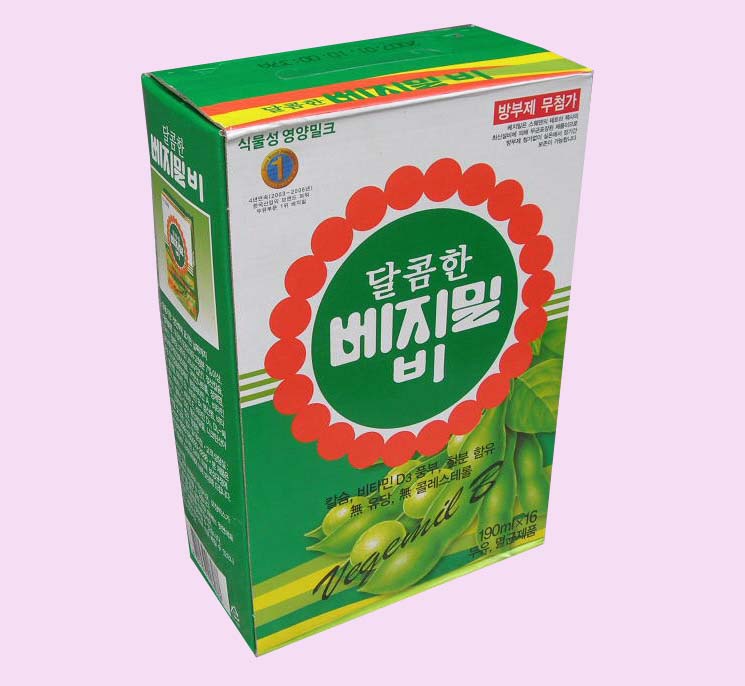
Why is my blog address bejimil.blogspot.com?  In Korea, they have this amazing soy drink called Vegemil / Bejimil.  It’s amazing.  I don't like drinking regular milk, so I drank a lot of Vegemil last year.  They have a sweetened version that’s perfect on its own, and an unsweetened version that is perfect for cereal.  The funny thing is, the Korean spelling for Vegemil / Bejimil is 베지밀, which looks a lot like the spelling of my name 벤자민 (Benjamin), so one of my Korean friends started calling me Vegemil as a nickname, and it stuck. 


Also, I should point out that the photo at the top of the blog is one of my favorites.  I think it's the perfect juxtaposition of traditional and modern Korea, with Namsan Tower overlooking a traditional Korean folk village.  


I don’t consider myself the blogging type, so I wasn’t sure if I was going to blog this year.  In fact, my last (and only) blog that I tried to write 3 years ago ended after just two posts.  Instead of blogging last year for the Light Fellowship, I opted to write an end-of-program report.  But I figured I would give it a try this year.  Worst case, I can always stop blogging and write an end-of-program report again.  Hopefully I’ll be able to keep it up though.  Maybe if I can’t think of anything to write about, I can just post photos of delicious Korean food :P